Enter the length, width and thickness of your slab — or the diameter and depth of your post holes — and the calculator below gives you the volume in cubic yards plus the number of 40, 60 or 80 lb bags to buy. It adds 10% for waste by default, because running short halfway through a pour is the one mistake you can’t fix later.
Concrete Calculator
Results update as you type. Use decimals for partial feet (10 ft 6 in = 10.5).
–
At this size, get a quote for ready-mix delivery before you buy bags. Mixing this many bags by hand is a very long, heavy day.
Bag yields used: 80 lb ≈ 0.60 cu ft, 60 lb ≈ 0.45 cu ft, 40 lb ≈ 0.30 cu ft (typical for standard concrete mix). Bag counts are rounded up.
How the concrete math works
Concrete is sold by volume, so every project comes down to one question: how many cubic feet is this shape? The only trap is the thickness. Length and width are usually measured in feet, but thickness is measured in inches, so you divide it by 12 before multiplying.
Worked example: a 12 × 10 ft patio, 4 inches thick
- Volume: 12 × 10 × (4 ÷ 12) = 40 cubic feet.
- Add 10%: 40 × 1.10 = 44 cubic feet.
- Cubic yards: 44 ÷ 27 = 1.63 yd³.
- Bags: 44 ÷ 0.60 = 73.3, so you buy 74 bags of 80 lb (or 98 bags of 60 lb).
Seventy-four bags is almost three tons of material to lift, mix and pour. That's why the calculator shows a ready-mix tip as soon as a job passes one cubic yard.
Round holes: fence posts, deck footings and columns
For a cylinder, the volume is π × radius² × depth. A 10-inch hole that is 3 feet deep holds about 1.64 cubic feet, a little under three 80 lb bags. Setting eight fence posts in holes like that, with 10% extra, takes about 24 bags of 80 lb. The post itself takes up some room, so this estimate leaves you a small cushion.
Quick reference: bags for common slab sizes
All figures assume a 4-inch slab with 10% extra already included, rounded up to whole bags.
| Slab size | Cubic yards | 80 lb bags | 60 lb bags |
|---|---|---|---|
| 4 × 4 ft | 0.22 | 10 | 14 |
| 6 × 6 ft | 0.49 | 22 | 30 |
| 8 × 8 ft | 0.87 | 40 | 53 |
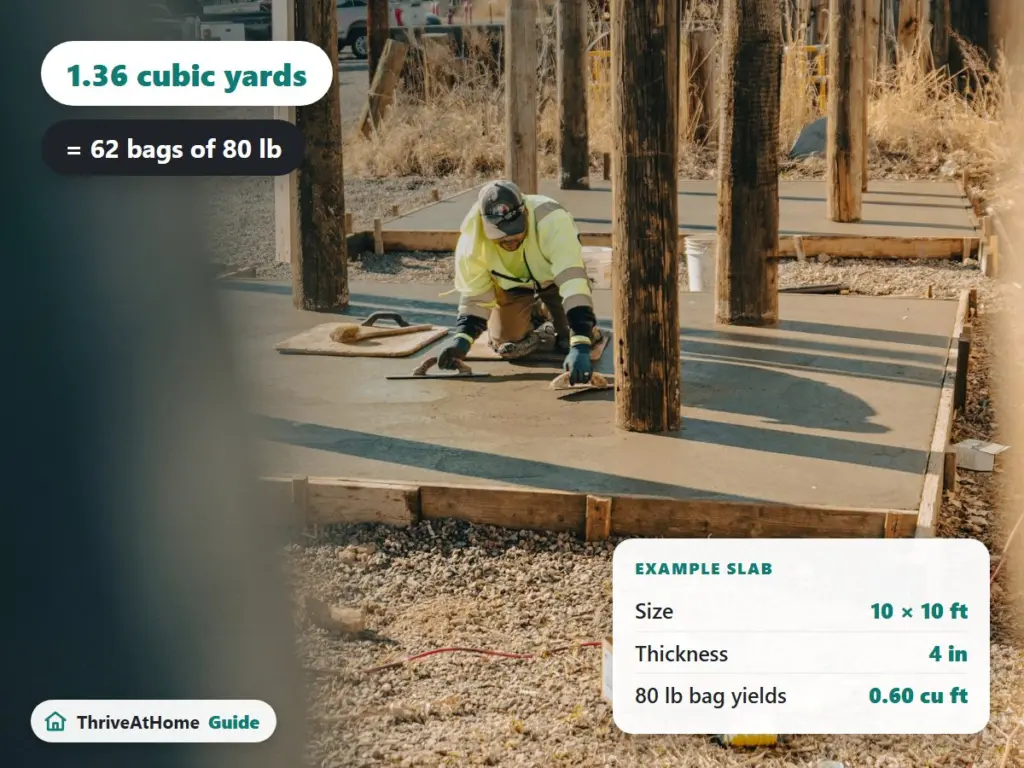
| 10 × 10 ft | 1.36 | 62 | 82 |
| 12 × 12 ft | 1.96 | 88 | 118 |
| 10 × 20 ft | 2.72 | 123 | 163 |
How thick should the slab be?
| Project | Typical thickness | Notes |
|---|---|---|
| Walkway or patio | 4 in | The standard for foot traffic and patio furniture |
| Shed floor | 4 in | Thicken the edges if the shed is large or heavy |
| Driveway, passenger cars | 4–5 in | Go to 5–6 in for pickups, RVs or delivery trucks |
| Hot tub pad | 4–6 in | Follow the hot tub maker's spec: a filled tub is very heavy |
| Fence post hole | Diameter about 3× the post width | Depth depends on post height and your local frost line |
Bags or a ready-mix truck?
One cubic yard equals 45 bags of 80 lb. Below that, bags are usually the practical choice. Above it, the labor adds up fast and a truck often makes more sense, even after delivery fees.
| Bagged concrete | Ready-mix delivery | |
|---|---|---|
| Best for | Post holes, small pads, repairs, steps | Patios, driveways, large slabs |
| Practical size | Up to about 1 cubic yard | From about 1 cubic yard up |
| Labor | You mix every bag (a mixer helps a lot) | Arrives mixed; you need helpers ready to place and finish |
| Watch out for | Uneven batches if you rush the mixing | Minimum orders and short-load fees on small jobs |
Five mistakes that leave you short
- Forgetting to divide the thickness by 12. Multiplying feet by inches gives a number 12 times too big, and it's surprisingly common.
- Measuring on uneven ground. A "4-inch" slab that is really 4.5 inches deep in low spots needs about 12% more concrete. Measure the depth in several places.
- Skipping the waste allowance. Spills, form boards that bow, and material left in the mixer all add up. Keep the 10%.
- Ordering the exact amount from a truck. A second short load costs far more than a little extra on the first one.
- Buying the wrong mix. Fast-setting mix is handy for fence posts because you don't have to mix it in a wheelbarrow, but it sets too quickly to level a slab. For slabs, use a standard or high-strength concrete mix.
Related calculators
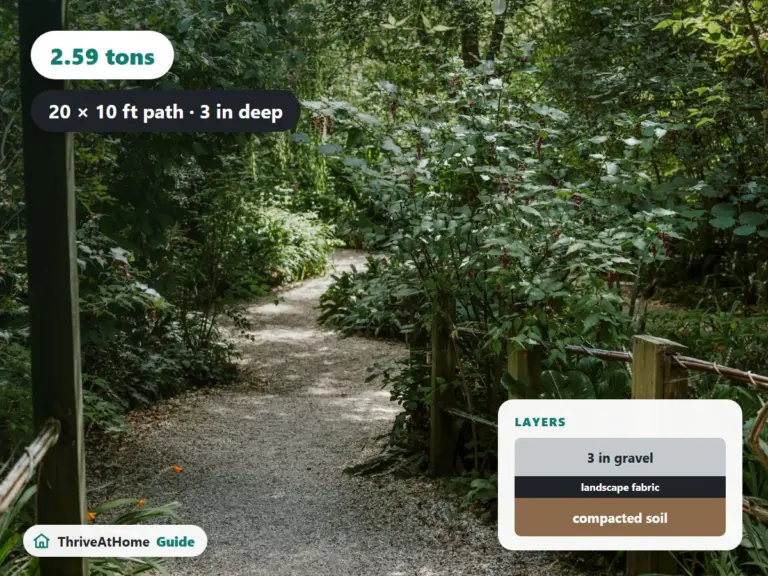
- Gravel calculator: many slabs sit on a compacted gravel base of about 4 inches.
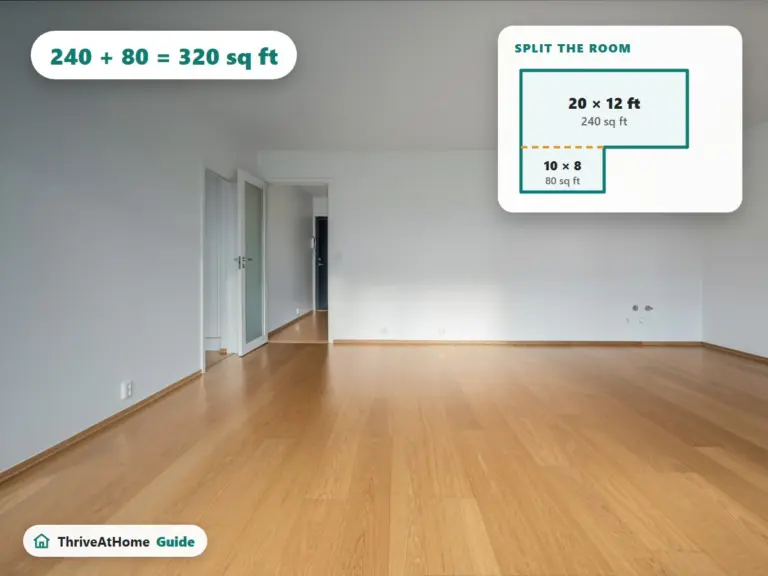
- Square footage calculator: for L-shaped or irregular pads, find the area first.
Frequently asked questions
How many 80 lb bags of concrete make a yard?
About 45 bags. One cubic yard is 27 cubic feet, and an 80 lb bag yields about 0.60 cubic feet (27 ÷ 0.60 = 45). With 60 lb bags you need 60, and with 40 lb bags you need 90.
How much area does one bag of concrete cover?
An 80 lb bag covers about 1.8 square feet at 4 inches thick, or about 3.6 square feet at 2 inches. That is why even a small patio needs dozens of bags.
Do I need gravel under a concrete slab?
Most patios, walkways and driveways are poured over a compacted gravel base, commonly around 4 inches, which helps with drainage and keeps the slab from settling unevenly. Use the gravel calculator to size it.
What's the difference between cement, concrete and mortar?
Cement is the powder that binds everything together. Concrete is cement mixed with sand and gravel, and it's what you pour for slabs and posts. Mortar is cement and sand without the gravel, used to lay bricks and blocks.
Bag yields are based on typical figures for standard concrete mix published by manufacturers such as Quikrete. Always check the yield printed on the bag you buy.