Most houses are designed for someone who is 35, carries everything in one trip and never thinks about the step into the tub. Live in the same place for thirty years and the house doesn’t change, but the people in it do. The step gets taller, the bathroom floor gets slicker, and the round doorknob gets harder to turn on a cold morning.
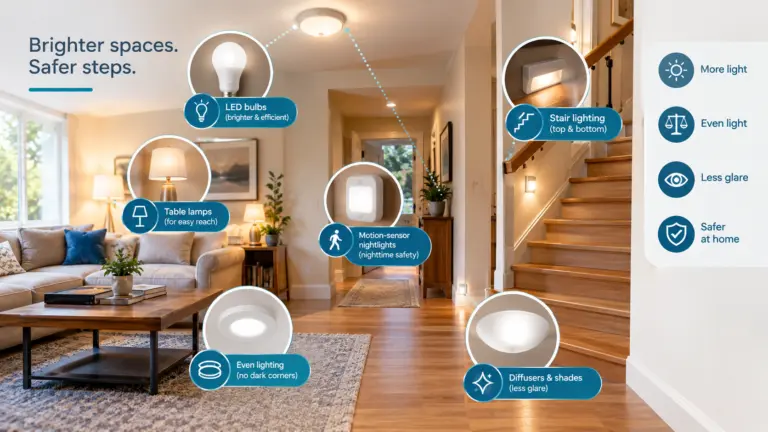
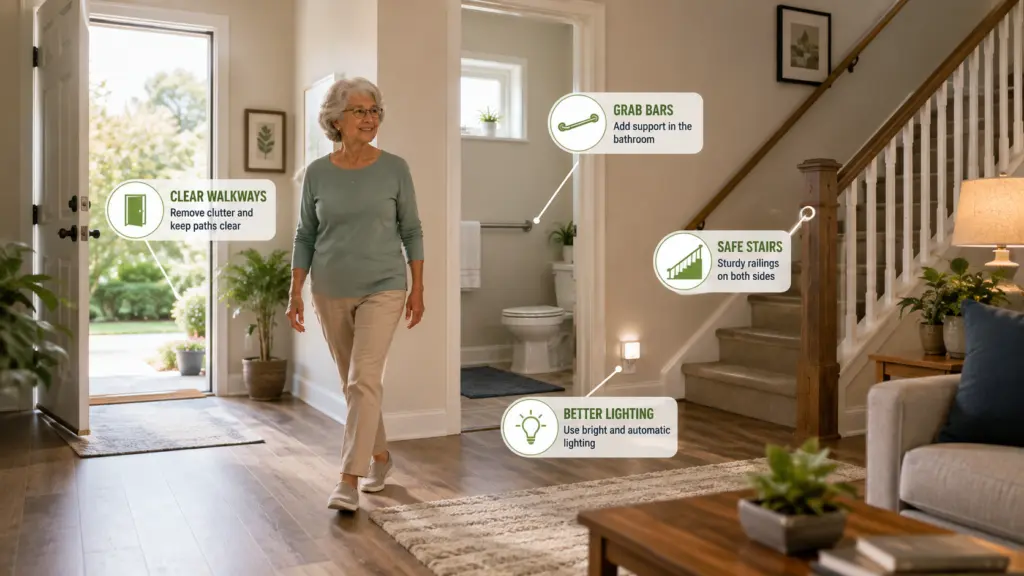
None of it calls for a remodel on day one. If you only do four things, make them grab bars in the bathroom, brighter and automatic lighting, no loose rugs or cords on the floor, and solid railings on both sides of the stairs. Everything below is about what comes after that, and roughly what it costs.
Houses aren’t built for every stage of life
Small changes in balance, strength, vision, and grip mean everyday tasks carry more risk than they used to. The most serious consequence is a fall — the leading cause of injury for adults 65 and older — but an unsafe home also chips away at confidence and independence. Most homes were built for young, able-bodied adults rather than for aging in place, a gap highlighted by AARP’s free HomeFit Guide. Making the home safer is the single most cost-effective step in any aging-in-place plan.
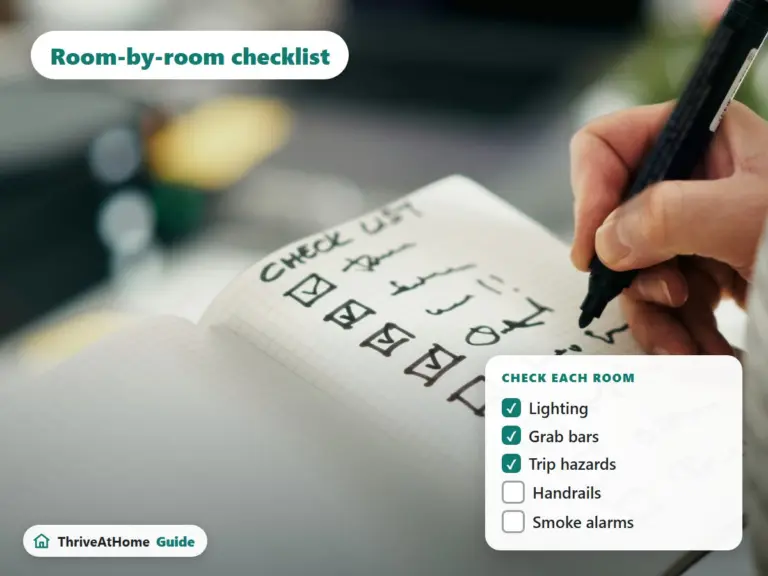
The free fixes come first: clearing clutter, taping down or removing rugs, plugging in nightlights. Walk the house with our room-by-room safety checklist to find them. The rest of this page is about the changes you make to the house itself.
Do these first, plan these next
Think of it as three piles. The first is cheap and fixes the most common problems. The second takes a weekend or a contractor. The third waits until someone actually needs it.
What each change costs
The essentials (grab bars, lighting and railings) often come to a few hundred dollars all together. The big jumps come from showers, stairlifts and ramps. These are one-time costs, and prices swing a lot depending on the product, the house and whether you install it yourself.
| Modification | What it helps with | Approx. one-time cost (USD) |
|---|---|---|
| Grab bars (bathroom) | Support at toilet, shower, and tub | $15–40 each + install |
| Comfort-height toilet / raised seat | Easier, safer sitting and standing | $25–400 |
| Walk-in or curbless shower | Eliminates the tub step-over | $2,500–10,000+ |
| Lever door & faucet handles | Easy use for weak or arthritic hands | $10–30 each |
| Brighter + motion-sensor lighting | Visibility, especially at night | $10–30 per fixture |
| Stair railings (both sides) | Safe use of stairs | $100–300 |
| Stairlift | Access between floors when stairs are unsafe | $2,000–5,000+ |
| Entry ramp / step-free entrance | Getting in and out safely | $1,000–3,000+ |
One or two changes per room
You don’t need a list of fifty items. Each room has a couple of changes that do most of the work:
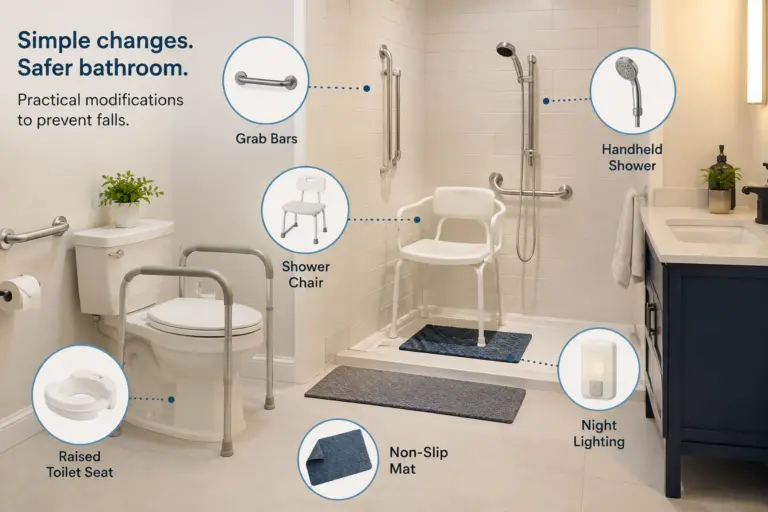
- Bathroom — grab bars, non-slip surfaces, and a walk-in shower. Full guide: bathroom modifications.
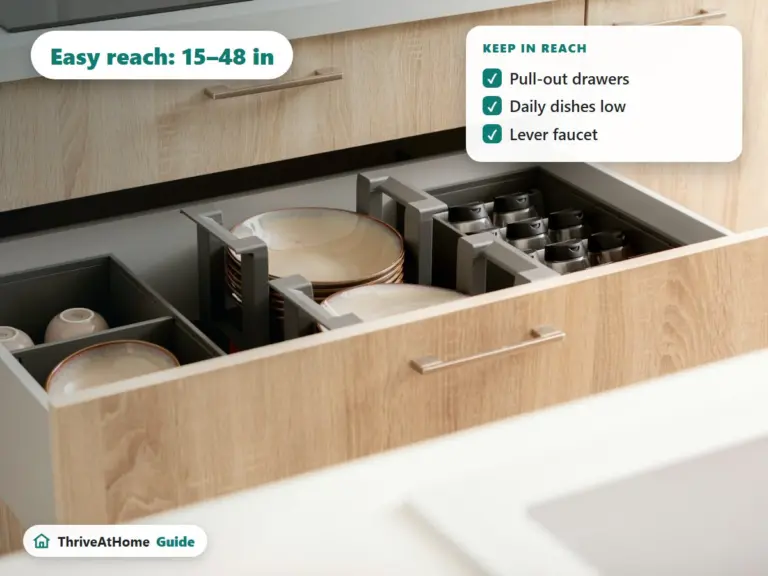
- Kitchen — store everyday items within easy reach, add task lighting, and fit lever faucets. See our accessible kitchen guide.
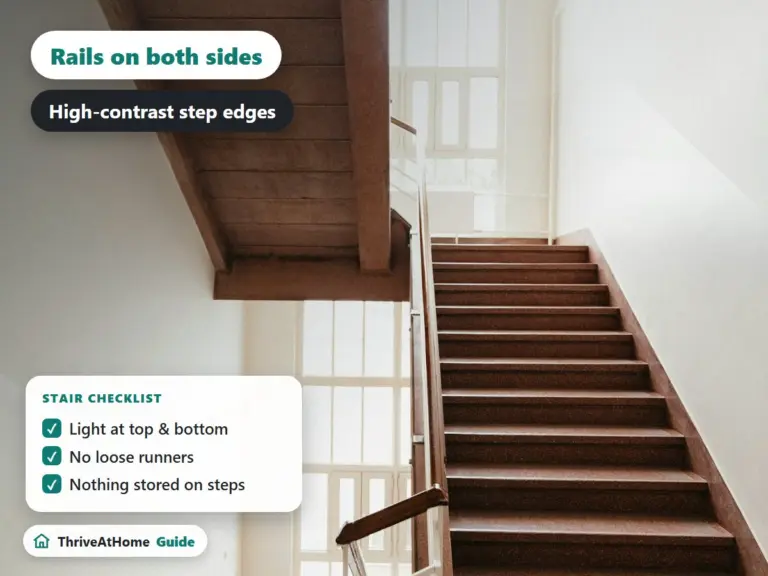
- Stairs & hallways — railings on both sides, high-contrast edge marking, and bright, switchable lighting.
- Bedroom — a bed at the right height, a lamp within reach, and a clear, lit path to the bathroom.
- Living room — a firm, supportive chair, wide pathways, and no loose rugs or cords.
- Entryways — step-free access where possible, lever handles, and good lighting at the door.
The walk from the car to the door
It’s easy to fix everything inside and forget the three porch steps everyone uses twice a day. Outdoor steps, uneven paths and a dark driveway deserve the same attention.
- Add sturdy handrails to outdoor steps, porches, and the path to the door.
- Light walkways, the driveway, and the entrance with motion-sensor fixtures.
- Keep paths even and clear of ice, moss, and leaves, and repair cracked or uneven surfaces.
- Consider a ramp or step-free entrance for anyone using a walker or wheelchair.
- Make the house number large and visible so emergency responders can find the home quickly.
Smoke, carbon monoxide and a way out
Falls get most of the attention, but fire is the other big risk: at age 65, people are more than twice as likely to die in a home fire, and adults 65 and older account for about 45% of home-fire deaths, according to the National Fire Protection Association (NFPA). A few steps sharply reduce the danger.
- Install interconnected smoke and carbon monoxide alarms on every level, and test them monthly. Choose models with 10-year sealed batteries, or a bed-shaker or strobe alert for anyone with hearing loss.
- Practice a simple escape plan with two ways out of each room, reachable without stairs where possible.
- Cooking is the top cause of home fires — never leave the stove unattended, and keep towels and packaging away from burners.
- Keep a phone within reach of the bed and the favorite chair, so calling for help never means crossing a dark room.
Think universal design, not “for the elderly”
The best modifications do not make a home look like a hospital — they simply make it work better for everyone. This idea is called universal design: features that are comfortable for all ages and abilities. A curbless shower, lever handles, good lighting, and a step-free entrance are just as convenient for a young parent carrying groceries as for an older adult. Choosing designs that blend in keeps a home feeling like home, which makes changes far easier to accept.
Who to call for the bigger jobs
Nightlights, lever handles and a raised toilet seat are easy weekend jobs. Anything that has to hold a person’s weight is not. These are the people worth calling:
- An occupational therapist (OT) can assess the home and recommend changes matched to a specific person’s abilities — often the most valuable first call.
- A Certified Aging-in-Place Specialist (CAPS) is a contractor trained in these modifications, useful for bathrooms, ramps, and structural work.
- Anything structural or load-bearing — grab bars anchored to studs, stairlifts, widened doorways — should be installed by a qualified professional so it holds when it matters.
Before you pay for everything yourself: Original Medicare generally doesn’t cover remodeling like grab bars, ramps or a new shower, though it may cover some prescribed equipment such as a walker. Medicaid waiver programs, VA housing grants and your local Area Agency on Aging are the places that more often help with home changes for people who qualify.
Sources: National Institute on Aging — Preventing Falls at Home; CDC — About Older Adult Fall Prevention; AARP HomeFit Guide; NFPA — Fire Safety for Older Adults. Cost ranges are general U.S. estimates and vary widely.
This article is general information about home safety and accessibility, not professional or medical advice. Check local building codes, and hire a licensed professional for electrical, plumbing or structural work. See our full Disclaimer.