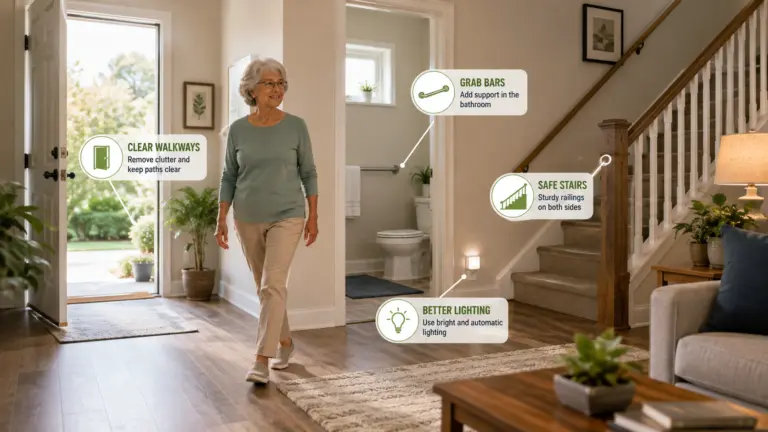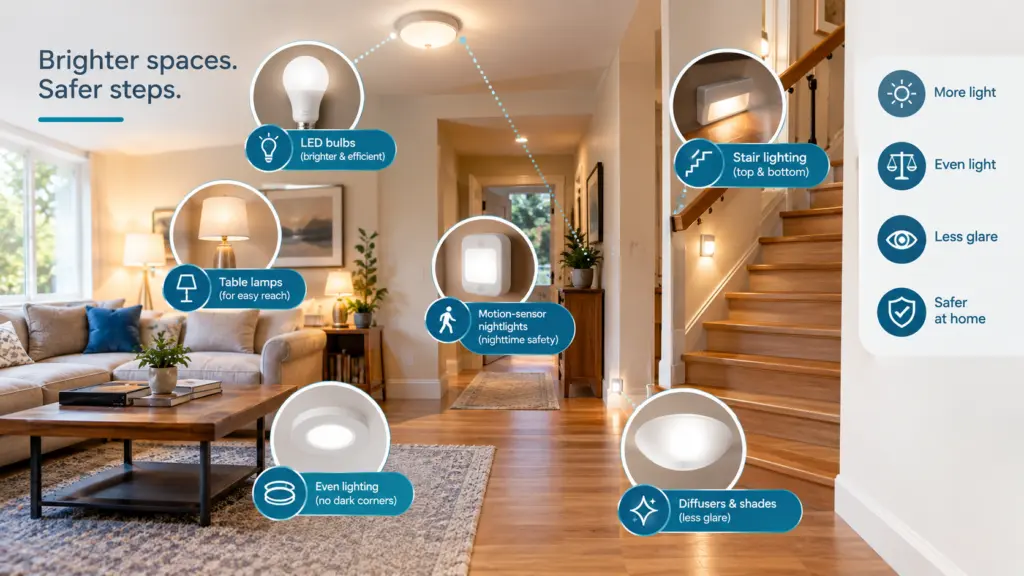
Here’s a test worth doing tonight: walk from the bedroom to the bathroom without touching a switch. If you’re feeling for the door frame halfway there, the house needs more light, and a few bulbs and a pack of motion-sensor nightlights will cost less than a dinner out. The catch is that the right amount of light changes with age. A hallway that looks fine to a 30-year-old visitor can look like a cave at 70.
Your eyes at 60 aren’t your eyes at 20
The changes are physical and gradual. With age, the lens of the eye yellows and thickens, letting less light through, and the pupil gets smaller, further limiting light. Research on the aging eye suggests a 60-year-old may need two to three times as much light as a 20-year-old to see equally well. Older eyes also become more sensitive to glare and slower to adjust between bright and dark areas — which is why moving from a lit room into a dark hallway is a common fall moment.
More light, even light, softer light
Room-by-room lighting
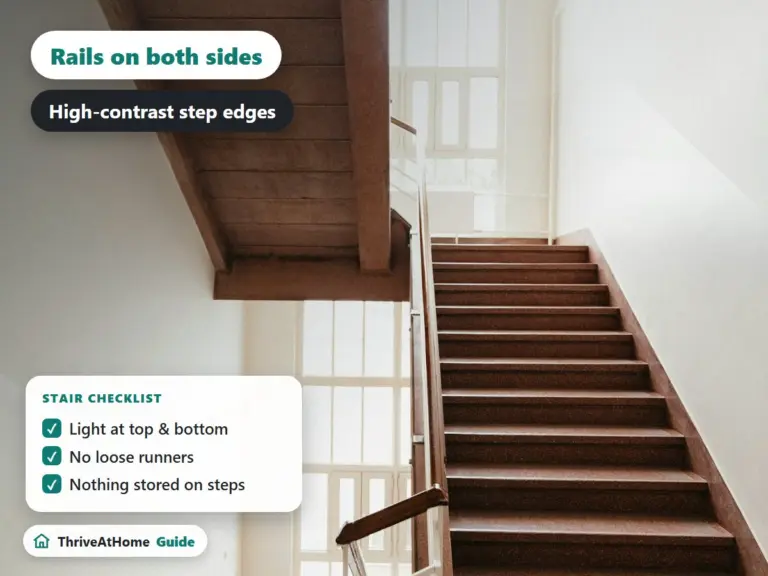
🧱 Stairs & hallways · priority
- Light the top and bottom of every staircase
- Switches at both ends so you never walk into the dark
- Even light with no shadows on the treads
- Motion-sensor nightlights along hallways
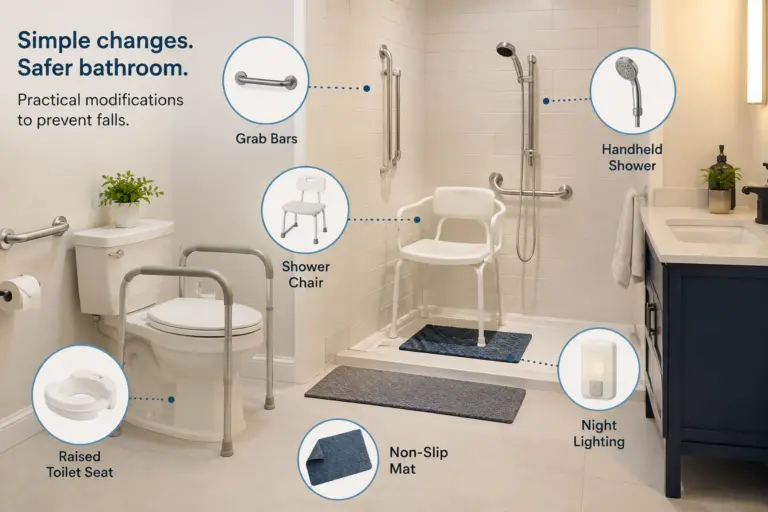
🛀 Bathroom
- Bright, glare-free light at the mirror and in the shower
- A motion-sensor nightlight for nighttime trips
- Avoid a single harsh overhead bulb that casts shadows
🍳 Kitchen
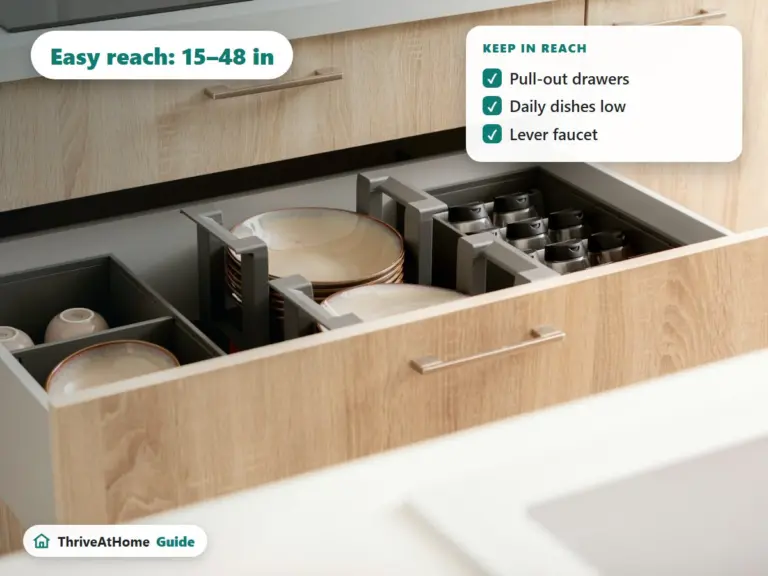
- Under-cabinet task lighting over counters
- Bright light over the stove and sink
- Layer ceiling light with focused task light
🛌 Bedroom & living room
- A lamp within reach of the bed and the favorite chair
- A lit path from bed to bathroom
- Good task lighting for reading; no dark corners
What to look for on the bulb box
Bulb packaging is busier than it needs to be. These are the only numbers that matter here:
| Choice | What to look for |
|---|---|
| Brightness | Measured in lumens, not watts — choose higher lumens for more light |
| Color temperature | 2700–3000K (warm) for living areas; 3500–4000K (neutral) for task areas like the kitchen and bath |
| Bulb type | LED — bright, long-lasting, energy-efficient, and instant-on |
| Glare control | Shades, frosted bulbs, and diffusers; avoid bare bulbs |
| Layering | Combine ceiling (ambient) + task + accent light rather than one central fixture |
Two details people miss. Very cool, bluish bulbs are great over a counter but a poor choice for bedrooms and night lights, because they can make it harder to fall back asleep. Glare also bounces off glossy floors and countertops, so in rooms that already feel harsh, matte finishes and an indirect lamp often help more than another bright fixture.
Lights that turn on before you reach for them
The riskiest lighting moment is the middle-of-the-night walk to the bathroom. Because older eyes adjust slowly to the dark, fumbling for a switch is dangerous. The fix is automatic light:
- Motion-sensor nightlights along the whole path from bed to bathroom.
- A warm, dim glow at night — bright enough to see, gentle enough to fall back asleep.
- Smart bulbs or plugs that turn lights on by schedule, voice, or phone — handy for limited mobility.
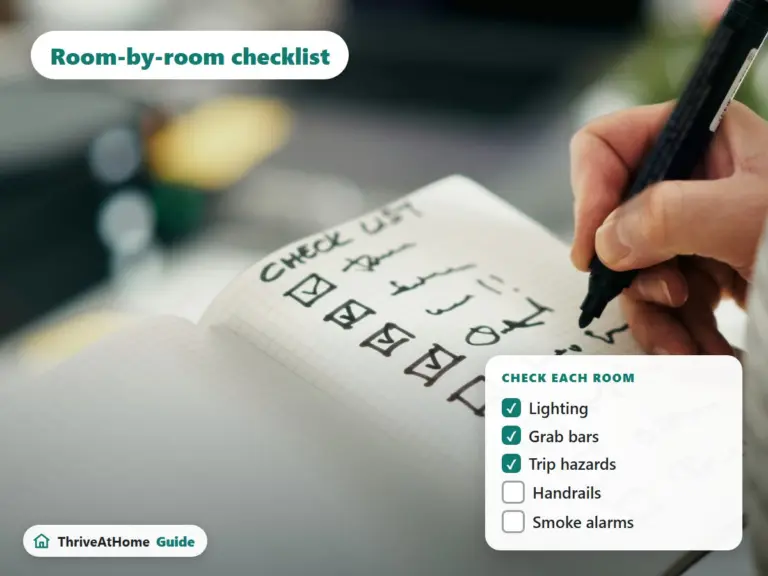
✅ Lighting upgrade checklist
Press Ctrl + P (or Cmd + P) to print and walk your home.
Five lighting habits worth breaking
- Relying on one central ceiling light. A single fixture leaves shadowy corners — layer in lamps and task lighting instead.
- Bare, exposed bulbs. They create harsh glare that aging eyes struggle with; always use a shade or diffuser.
- Dark stairs and hallways. These transition spaces cause many falls — light them well and add switches at both ends.
- Leaving bulbs until they burn out. Dimming or flickering bulbs quietly reduce safety; replace them promptly.
- Forgetting the nighttime path. The walk to the bathroom is the riskiest — never leave it unlit.
Good light makes every other fix work better. Grab bars and railings only help if you can see them. When the bulbs are done, the bathroom and the stairs are the next two places to look, and our home safety guide walks through the rest of the house.
Sources: NIH / National Academies — The Aging Eye; National Institute on Aging — Aging and Your Eyes.
This article is general information about home safety and accessibility, not professional or medical advice. Check local building codes, and hire a licensed professional for electrical, plumbing or structural work. See our full Disclaimer.