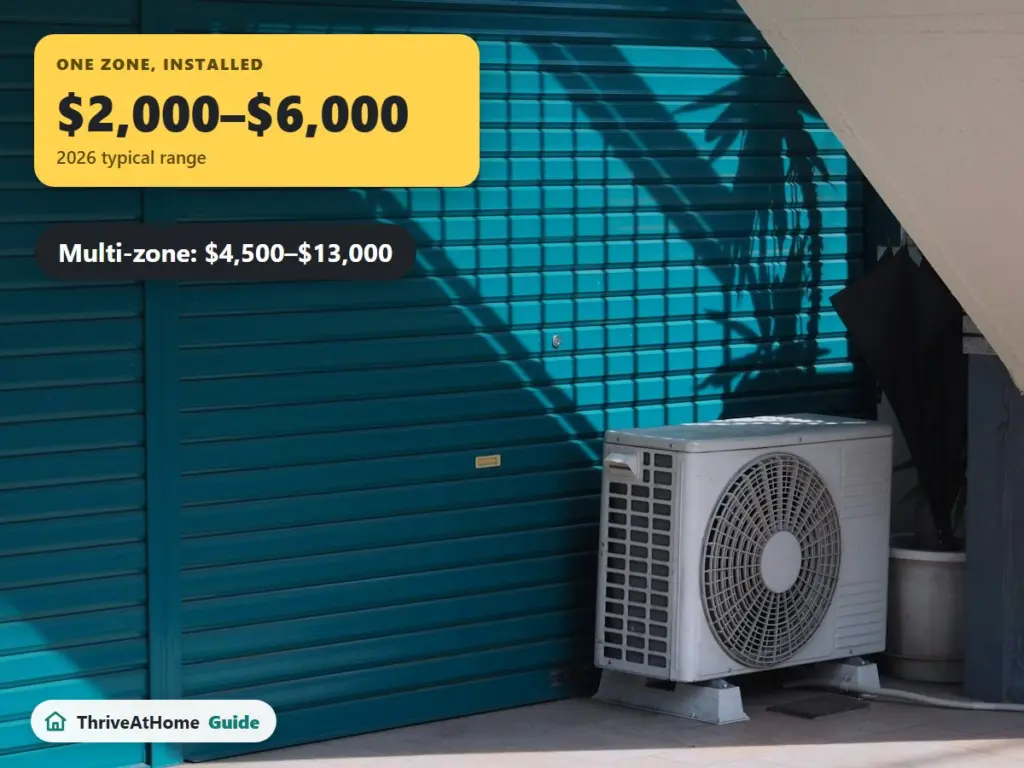
A mini split typically costs $2,000 to $6,000 for one zone installed in 2026, and $4,500 to $13,000 for a multi-zone system with two to four indoor units. DIY kits start around $1,500 per zone, before electrical work. Use the estimator below to get a range for your project, then read on for what drives the price up or down.
Mini Split Cost Estimator
A budgeting range based on 2026 cost guides. Your local quotes will vary.
–
Mini split prices by number of zones
| System | Typical installed cost | Per zone |
|---|---|---|
| 1 zone (single-zone) | $2,000–$6,000 | $2,000–$6,000 |
| 2 zones | $4,500–$8,000 | $2,250–$4,000 |
| 3 zones | $6,500–$10,500 | $2,150–$3,500 |
| 4 zones | $8,500–$13,000 | $2,100–$3,250 |
The total goes up with every indoor unit, but the cost per zone drops, because the outdoor unit, the trip and much of the setup are shared.
Price by size (single-zone)
| Size | Typically covers | Installed cost |
|---|---|---|
| 9,000–12,000 BTU (0.75–1 ton) | A bedroom up to a 550 sq ft living room | $2,000–$5,500 |
| 18,000–24,000 BTU (1.5–2 tons) | Open areas of about 550–1,500 sq ft | $3,000–$6,500 |
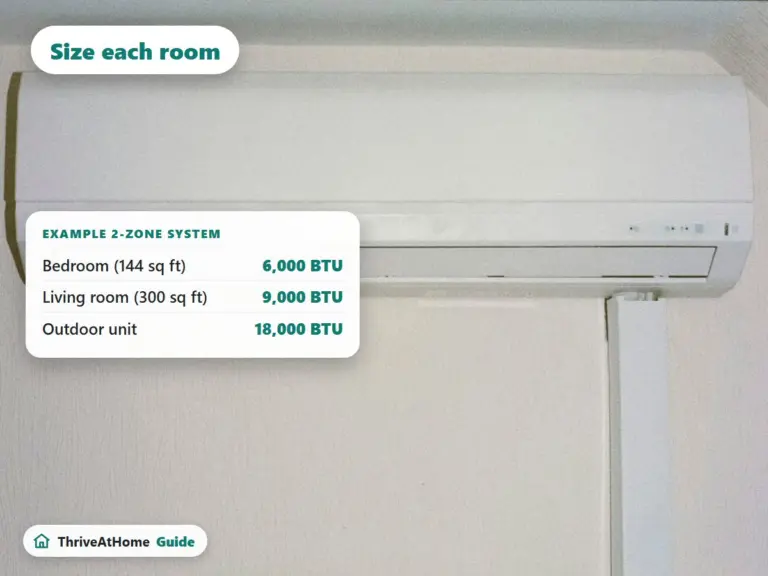
Not sure which size you need? Our mini split size calculator sizes each room and the outdoor unit.
What an installed price usually includes
- The outdoor unit and the indoor unit(s)
- Mounting the indoor head and setting the outdoor unit on a pad or bracket
- A standard length of refrigerant line set, often around 15–25 feet per zone
- Drilling the wall opening, running the lines and the condensate drain
- Vacuuming the lines, charging, start-up and testing
Ask every installer to list what’s included. Two quotes that look $1,000 apart are often covering different things.
Extra costs that show up on quotes
| Extra | Typical cost | When you need it |
|---|---|---|
| Longer line set | About $10–$25 per extra foot | The outdoor unit sits far from the indoor head |
| Condensate pump | About $150–$900 installed | Water can’t drain downhill to the outside |
| New electrical circuit | Varies; get an electrician’s quote | Almost always: mini splits need their own circuit |
| Electrical panel upgrade | About $700–$4,000 | The panel has no room or capacity for the new circuit |
| Wall bracket, stand or pad | Usually a small add-on | Depends on where the outdoor unit goes |
| Permit | Varies by city | Many areas require one for HVAC and electrical work |
DIY mini split kits: what you save and what you don’t
Pre-charged, quick-connect kits let a handy homeowner skip the refrigerant work that normally needs a licensed technician. Retail prices for popular 12,000 BTU DIY kits run roughly $1,500 to $2,400. That can cut the bill by thousands, but keep three things in mind:
- Electrical work is still needed. The unit needs a dedicated circuit, and in most areas that should be installed by a licensed electrician, with a permit where required.
- Line lengths are fixed. Pre-charged lines come in set lengths, so plan where both units go before you buy.
- Check the warranty terms. Some brands require registration or specific installation steps to keep the full warranty.
Tax credits and rebates in 2026
Other savings may still apply:
- Utility rebates. Many electric utilities offer rebates for ENERGY STAR certified heat pumps. Search by ZIP code with the ENERGY STAR Rebate Finder.
- State programs. Some states run their own heat pump incentives, including income-based rebates. The DSIRE database lists them by state.
- Installer promotions. Ask about seasonal discounts. Shoulder seasons (spring and fall) are often less busy for HVAC contractors.
How to get an accurate quote
- Get at least three quotes from contractors who install ductless systems regularly.
- Ask for a load calculation (Manual J), not a guess based on square footage alone.
- Compare the same thing: the brand and model, SEER2 and HSPF2 ratings, line set length, electrical work and warranty.
- Ask who handles the electrical and whether permits are included.
Only cooling one room? A window unit may be all you need. Check the size with the BTU calculator.
Before you sign a quote
Is it really cheaper than central air? For one to three rooms, or a home with no ductwork, usually yes, because you skip the cost of adding ducts. For a whole house that already has good ducts, a multi-zone system with a head in every room can cost as much as replacing the central system, or more.
What does each extra room add? Roughly $2,000 to $3,000 per additional indoor unit on a multi-zone system, depending on the unit style, the line set run and local labor.
Could you install it yourself? With a pre-charged DIY kit, many homeowners handle the mounting and line connections. The dedicated electrical circuit is the part to hand to a licensed electrician, and standard systems that aren’t pre-charged need a technician certified to handle refrigerant.
Cost ranges are compiled from 2026 cost guides published by HVAC manufacturers and cost-estimating sites, and from current retail listings for DIY kits. They are budgeting estimates, not quotes.