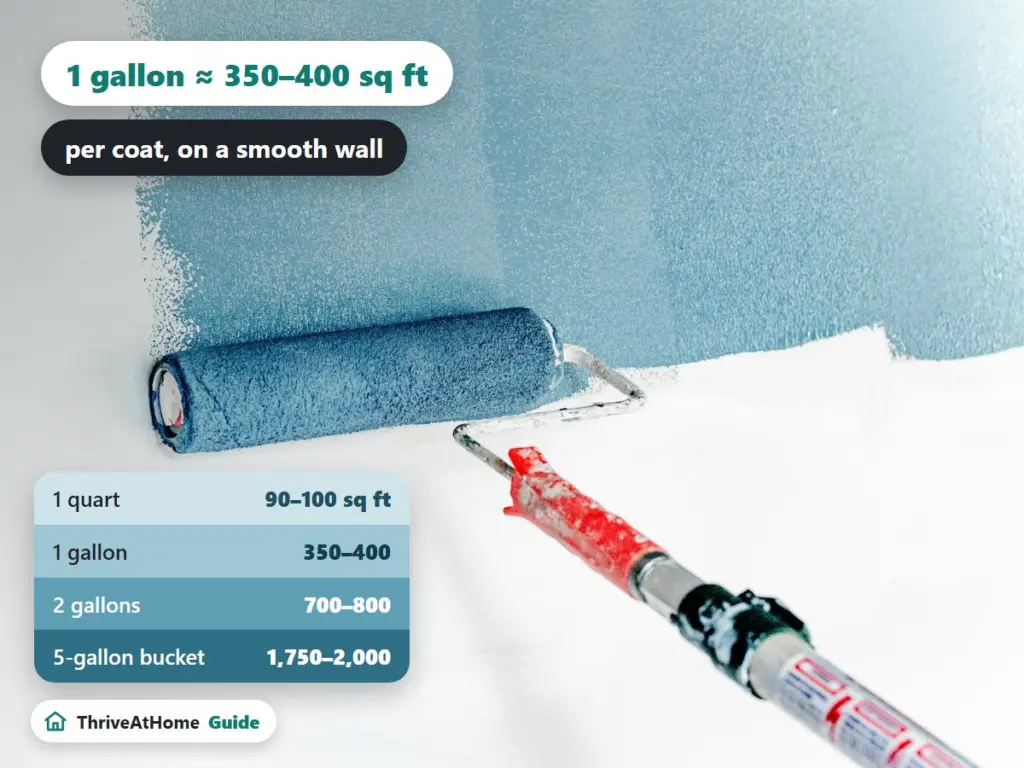
Those are the numbers on the can, and Sherwin-Williams puts a typical gallon at about 350 to 400 square feet. The trouble is that the can is describing one coat on a smooth wall, and most rooms get two coats on walls that are anything but perfect. Here’s how to turn the label into the number of cans you should actually carry out of the store.
One coat or two? That cuts the answer in half
Two coats is the safer plan for most walls. The first coat almost always looks patchy, especially going from dark to light or the other way around, and the second is what makes the color look even. If the new color is close to the old one and the wall is in good shape, one coat can be enough, but you won’t know until it’s dry.
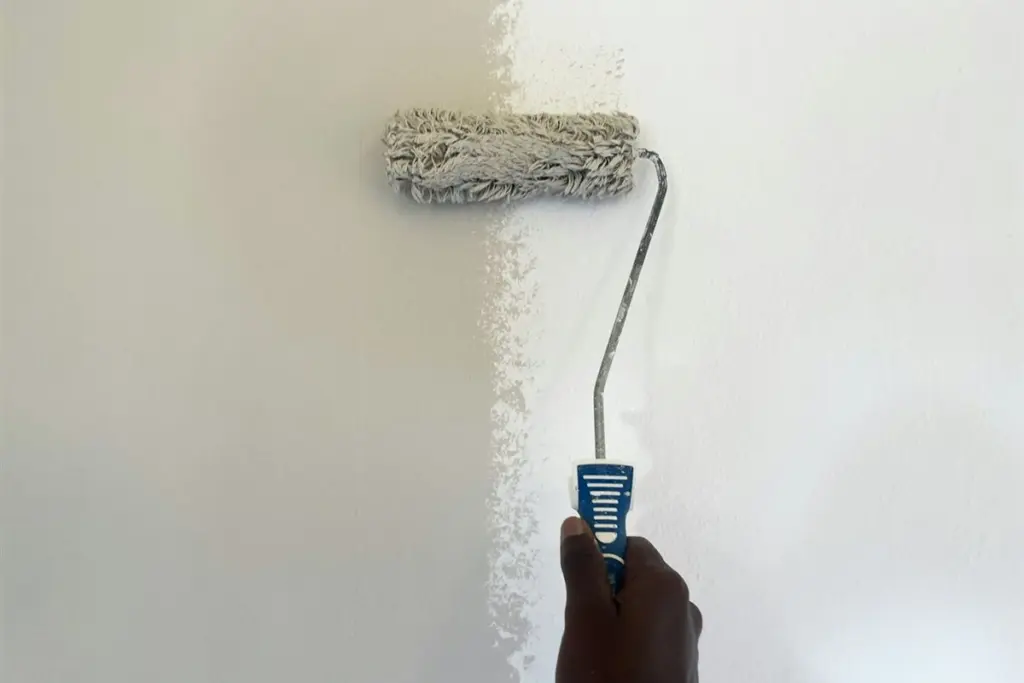
What the number on the can doesn’t count
Sherwin-Williams is refreshingly honest about this in its FAQ: the coverage figure is “theoretical,” because it doesn’t account for the texture of the surface or the paint left on your roller and tools. These are the things that eat into it:
The bars show the trend, not exact figures; the primer number is Sherwin-Williams’ own. For the paint you actually buy, the label or the product’s data sheet gives its coverage range. When in doubt, use the low end.
What each can size really paints
To find the area of a room’s walls, picture them unfolded into one long strip. The length of the strip is the distance around the room, and its height is the ceiling height. Take out the doors and windows, and what’s left is what you paint:
Here’s the same math for common rooms with 8-foot ceilings, at two coats:
| Project | Area to paint | Paint for two coats | Buy |
|---|---|---|---|
| Accent wall, 12 ft wide | 96 sq ft | 0.5–0.55 gal | 1 gallon (or 2 quarts) |
| Small bathroom, 5 × 8 ft | ~187 sq ft | 0.9–1.1 gal | 1 gallon, a tight fit |
| 12 × 12 ceiling | 144 sq ft | 0.7–0.8 gal | 1 gallon |
| 10 × 10 bedroom walls | ~284 sq ft | 1.4–1.6 gal | 2 gallons |
| 12 × 12 bedroom walls | ~333 sq ft | 1.7–1.9 gal | 2 gallons |
| 15 × 20 living room walls | ~494 sq ft | 2.5–2.8 gal | 3 gallons |
A 5-gallon bucket covers 875 to 1,000 square feet at two coats. That’s two or three average bedrooms, or a living room plus a hallway, if they’re all the same color.
Is one gallon enough for a bedroom?
The homework problem everybody searches
Paint math is a classic school word problem, and it’s a good way to see the method. Say a meeting room has two walls of 12 × 14 feet and two walls of 12 × 25 feet, and one gallon covers 400 square feet:
The key step is the last one: always round up. Nobody sells 0.34 of a gallon, and running out halfway down a wall is worse than having some left over. For a real room you’d also subtract the doors and windows first.
Buying it without a second trip
Painting an odd-shaped room or a whole floor? Measure it first with the square footage calculator, then bring the wall area to the paint calculator for the final count.
Sources: Sherwin-Williams, paint calculator FAQ (350–400 sq ft per gallon of paint, 200–300 per gallon of primer); Sherwin-Williams, homeowner FAQ (coverage is theoretical). Room figures are our own calculations. Always check the coverage printed on your product. General information only; see our Disclaimer.