It always seems to happen on the coldest morning of the year. You turn on the kitchen faucet and get a sputter, a gurgle, maybe a thin trickle, and then nothing at all. Take a breath: a frozen pipe is not a burst pipe, at least not yet. Caught early, most frozen pipes thaw with a hair dryer and a bit of patience. Here’s how to find the frozen spot, warm it up without making things worse, and set your house up so this doesn’t become a yearly tradition.
- Leave that faucet open. Moving water helps the ice melt.
- Find the cold spot. Start near the faucet and follow the pipe back.
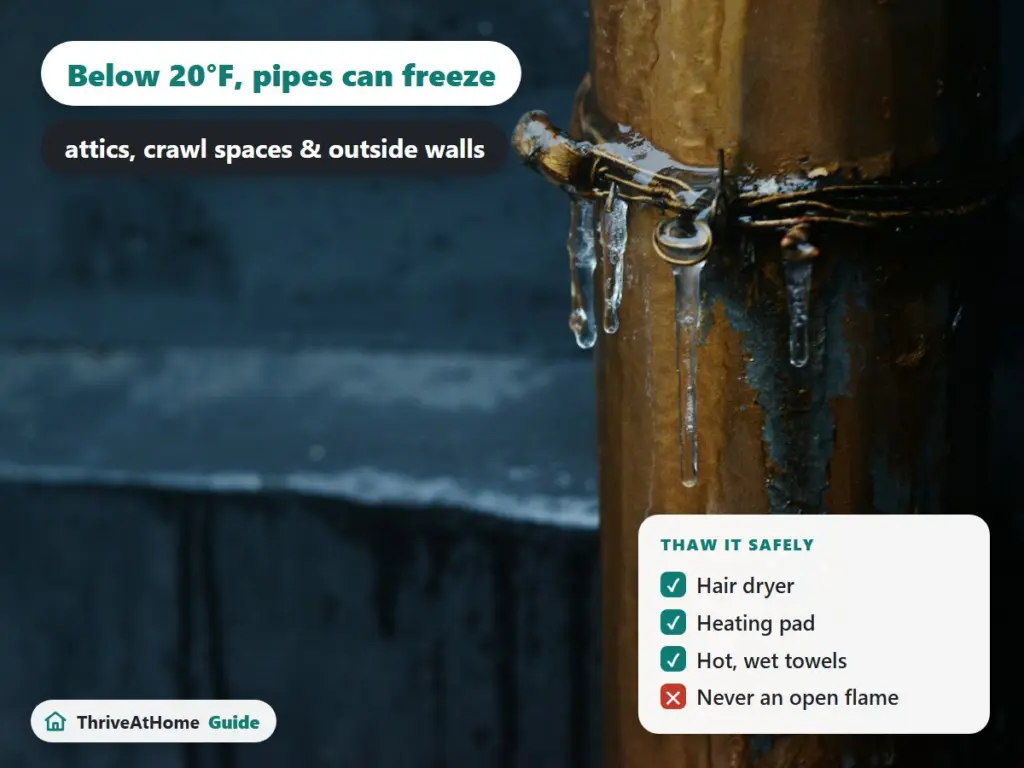
- Warm it gently with a hair dryer, a heating pad or hot, wet towels.
- No torches or open flames. Ever.
- See water spraying or dripping from a pipe? Shut off the main water valve before anything else.
Which pipe froze? Play detective for two minutes
The faucets tell you where to look. If one faucet is dry and the rest work, the ice is somewhere in the line feeding that faucet, usually where it passes through a cold spot. If every faucet in the house is dry, look closer to where the main water line comes in: a crawl space, an unheated corner of the basement or the garage.
The American Red Cross lists the usual suspects, and they’re worth checking in this order:
Run your hand along the exposed pipe. The frozen section often feels noticeably colder than the rest, and sometimes you’ll see frost on it. If you spot a bulge or a crack, stop there: that section may already be split, and thawing it will turn ice into a leak. Close the main valve first and call a plumber.
How to thaw it without making things worse
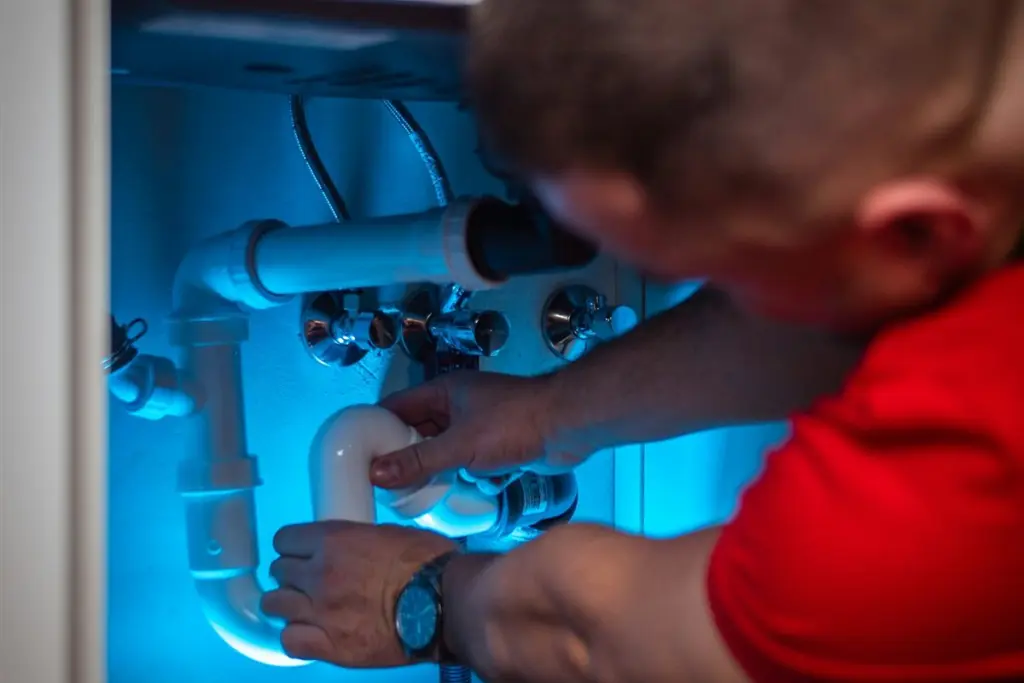
Thawing a pipe is less about power and more about patience. You want steady, gentle warmth, not a blast of heat in one spot.
- Open the faucet the pipe feeds, both hot and cold. As the ice softens, the moving water speeds things up and gives the meltwater somewhere to go.
- Start warming next to the faucet and work back toward the ice. That way melted water can drain out instead of getting trapped behind the blockage.
- Use gentle heat: a hair dryer on medium, moved back and forth; an electric heating pad wrapped around the pipe; or towels soaked in hot water, swapped as they cool. A space heater aimed at the area works too, as long as it stays clear of puddles and anything that can burn, and you stay in the room.
- Keep going until the faucet runs at full pressure. Then check every other faucet in the house. If one pipe froze, its neighbors may be close behind.
If the frozen section is hidden inside a finished wall, turn the heat up, open nearby cabinet doors and give it a few hours. If the water still isn’t back, or you can’t find the frozen spot at all, that’s the point to call a plumber.
What you shouldn’t do is simply wait for warmer weather. Pressure builds while the pipe is frozen, and many bursts only show themselves when the ice melts and water starts flowing through the crack. Better to thaw it on your schedule, while you’re home and watching.
- Hair dryer on medium
- Electric heating pad
- Towels soaked in hot water
- Space heater, watched the whole time
- Turning up the thermostat
- Blowtorch or propane torch
- Kerosene or propane heater indoors
- Charcoal grill or stove
- Leaving a space heater unattended
- Hitting the pipe to “break up” the ice
Why the hard line on flames? A flame can heat one spot so fast that the water inside flashes to steam and splits the pipe. And an open flame in a crawl space, surrounded by dry wood and dust, is a classic way to start a house fire. The Red Cross warns against both.
Already burst? Do these five things, in this order
- Shut off the main water valve. It’s usually where the main line enters the house: on a basement wall, in a crawl space or utility closet, near the water heater, or in a box by the street meter.
- Open a few faucets to drain what’s left in the lines and take pressure off the damaged pipe.
- Keep clear of water near outlets, cords and appliances. Only switch off a breaker if you can reach the panel from a dry spot. Otherwise, call an electrician or your utility.
- Call a plumber, and take photos and video of the damage before you clean up. Your insurer will want them.
- Start drying right away. The EPA says to dry water-damaged areas within 24 to 48 hours to prevent mold. Fans, a dehumidifier and open windows (if it’s above freezing outside) all help.
Figures from State Farm (January 2026), based on more than 20,000 claims.
About insurance: many homeowners policies cover sudden water damage from a burst pipe, but they often expect the house to have been kept heated, and the pipe repair itself may not be included. Worth a look at your policy before winter, not after.
One small job worth doing today, while nothing is leaking: find your main shutoff, make sure it actually turns, and hang a tag on it. In a real burst, nobody wants to be searching the basement with a flashlight while water pours through the ceiling.
Why 20°F is the number to watch
Water freezes at 32°F, but pipes inside a house rarely freeze the moment it hits 32 outside. Research from the University of Illinois’ Building Research Council, widely cited by the insurance industry, found that uninsulated pipes in an unheated attic started to freeze once the outdoor temperature dropped to about 20°F. Wind changes the math: a pipe sitting next to a gap in an outside wall can freeze on a breezy night well above that.
Make this the last frozen-pipe morning
Most of what prevents frozen pipes is free or close to it. The trick is doing it before the cold snap, not during.
- Let cold water drip from faucets fed by exposed pipes
- Open sink cabinets on outside walls
- Keep the garage door closed
- Keep the heat at the same setting day and night
- Foam sleeves on exposed pipes in the garage, basement and crawl space
- Seal gaps where pipes pass through outside walls
- Disconnect hoses, close the indoor valve for outdoor spigots, then drain them
- UL-listed heat cable on a pipe that freezes every year
- Thermostat at 55°F or higher
- Someone checks the house every day or two
- Long trip? Shutting the main valve and draining the lines helps, but not if you have fire sprinklers: it disables them
- A Wi-Fi leak sensor or thermostat with cold alerts
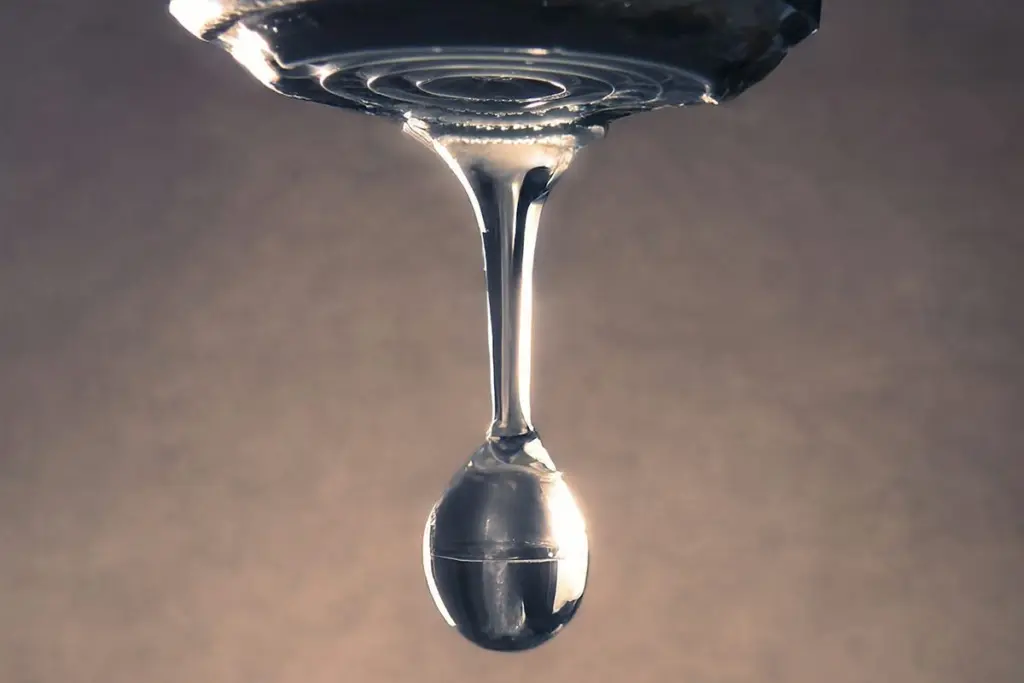
How much should it drip? A steady drip of cold water (the Red Cross specifies cold) or a pencil-thin trickle is plenty. You’re keeping water moving and easing pressure in the line, not filling the sink. A night of dripping costs pennies; a burst pipe can cost more than a used car.
Got PEX plumbing? It flexes more than copper or PVC, so it’s less likely to split, but it still freezes solid and its fittings can fail. Insulate it like any other pipe.
Is one cold room behind the problem? The heating tab of our BTU calculator shows how much heat that room needs.
This guide covers general home maintenance. If water has reached outlets, wiring or appliances, or you can’t stop a leak, call a licensed plumber or electrician. See our Disclaimer.