It’s 6 a.m., the house is 61 degrees, and you hold a hand over the vent. Air is coming out, but it’s cold. Or maybe nothing is coming out at all. A furnace that quits usually leaves clues: what it does, what it doesn’t do, and sometimes a little blinking light. Read those clues in the right order and you can often fix it yourself, or at least tell the technician exactly what’s wrong.
No emergency? Then pick what your furnace is doing and jump straight to it:
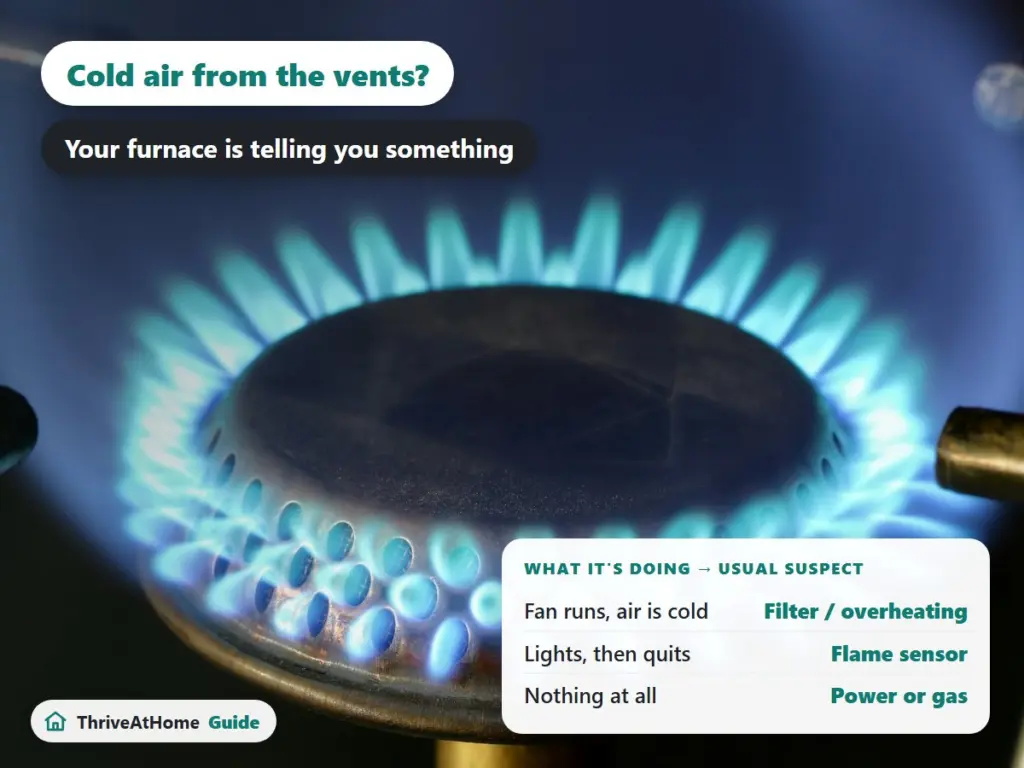
The fan runs, but the air is cold
Before anything else, give it two minutes. A gas furnace doesn’t blow hot air the second it turns on. It goes through a start-up routine, and the main blower is the last thing to join in:
That delay is deliberate. Carrier describes it as letting the heat exchanger warm up before air goes into the house. At the other end of the cycle, many furnaces keep the blower going for a minute or two after the burners stop, to use up the leftover heat. Cool air for the first minute is normal. Cold air for ten minutes is not, and these are the usual reasons, easiest first:
Nothing happens at all
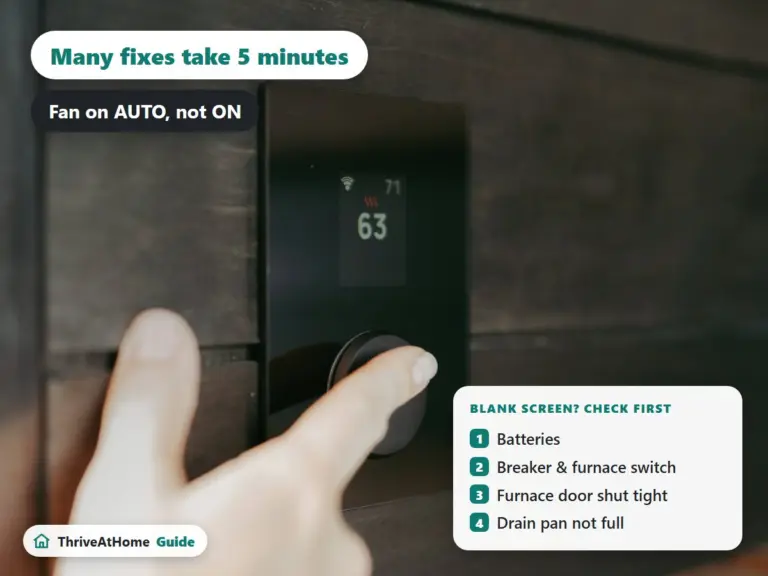
Total silence usually means the furnace isn’t getting the signal, the power or the fuel. Walk it from the wall to the furnace:
It lights, then shuts off
You hear it start, maybe see the glow, and a few seconds or minutes later it all goes quiet. That’s the furnace protecting itself. Two causes top the list. One is a flame sensor coated with grime: it can’t confirm there’s a flame, so the furnace cuts the gas as a precaution. The other is overheating from a dirty filter or blocked vents, which trips the high-limit switch again and again.
After a few failed starts, many furnaces lock themselves out for a while. Turning the power off and back on usually clears the lockout. If it happens again and again, though, the reset is only hiding the problem. Change the filter, open the vents, and if it keeps quitting, book the repair.
It runs and runs, but the house never warms up
If warm air is coming out of the vents but the house never catches up, the heat may be getting lost on the way. Ducts that run through an attic, crawl space or garage are the usual suspect:
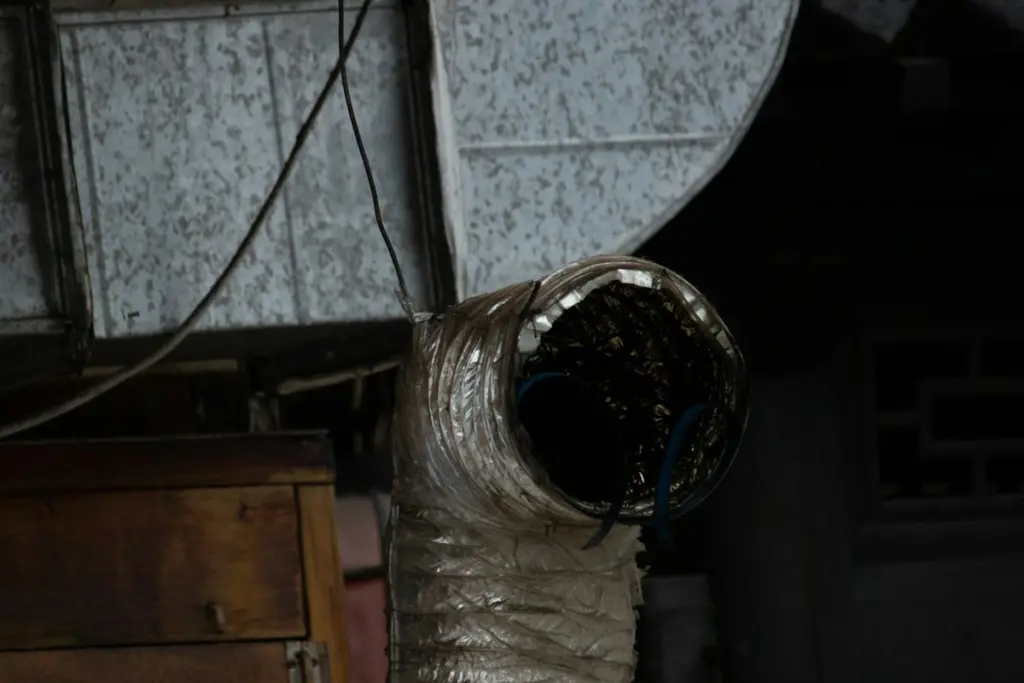
If you can reach the ducts safely, run the heat and feel along the joints. Reconnect anything that has come apart, and seal the gaps with mastic or metal foil tape. ENERGY STAR is blunt about ordinary duct tape: never use it, because it doesn’t last. Ducts hidden in walls and ceilings are a job for an HVAC contractor. And while you’re at it, check the filter again and make sure the supply and return vents aren’t closed or covered.
Have a heat pump? Cool air can be normal
Heat pumps play by different rules. In cold, damp weather, frost builds up on the outdoor coil, and every so often the system switches into defrost mode to melt it off. During that time:
Those details come from Trane, which also says when to worry: if defrost cycles get longer and longer while ice keeps building up on the unit, call your dealer. Heat pump air is also simply less hot than furnace air, so it can feel cool on your hand even when the system is working properly.
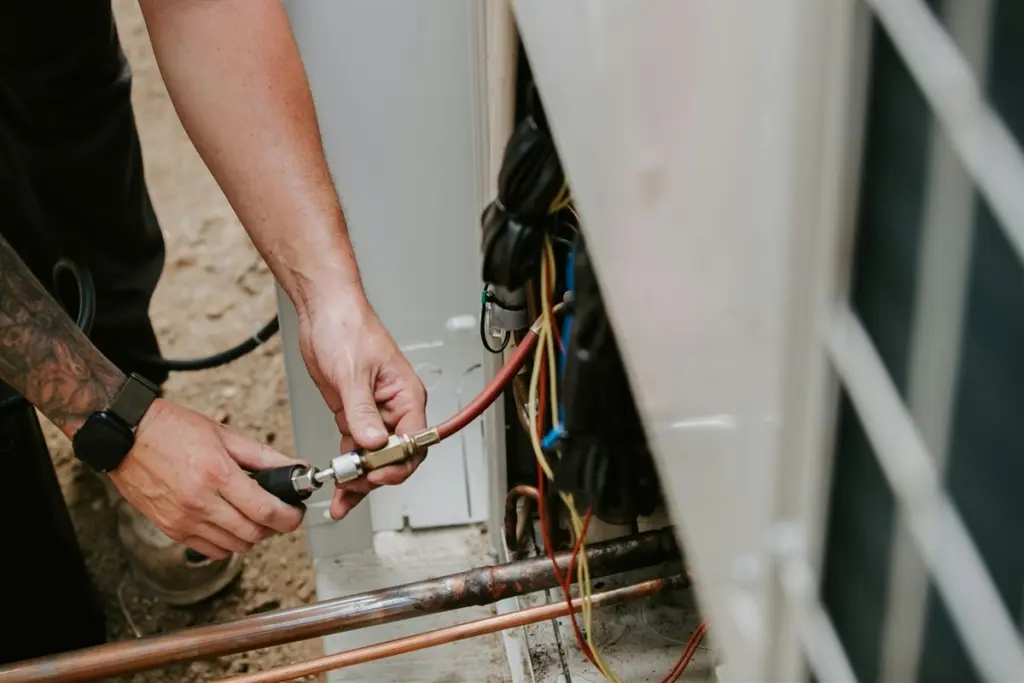
Yours to fix, or the technician’s?
| ✅ Safe to do yourself | 🔧 Leave to a technician |
|---|---|
| Thermostat settings and batteries | Cleaning or replacing the flame sensor |
| Replacing the air filter | Limit switch, igniter or control board |
| Breaker, furnace switch, front panel | Anything involving the gas valve or burners |
| Opening vents and clearing return grilles | A condensate drain that keeps clogging |
| Relighting a pilot by the printed instructions | Heat pump refrigerant or a frozen outdoor unit |
| Sealing ducts you can reach (mastic or foil tape) | Ducts inside walls and ceilings |
So it doesn’t happen again next January
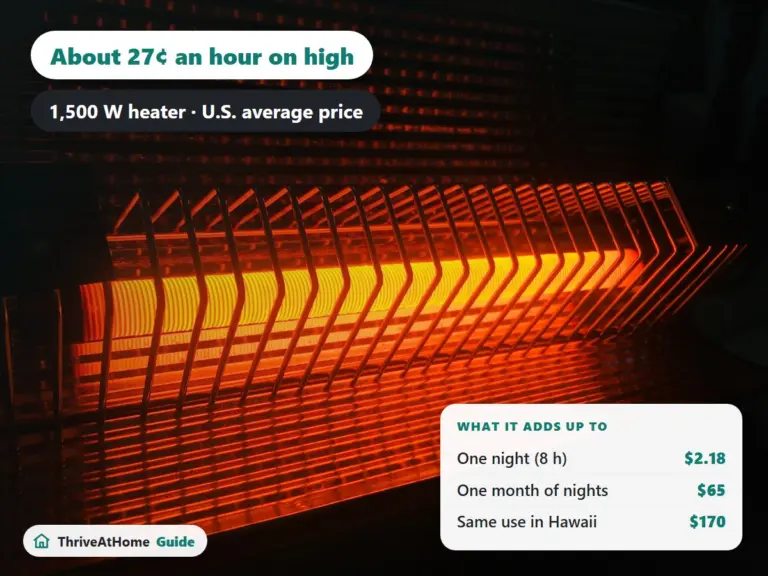
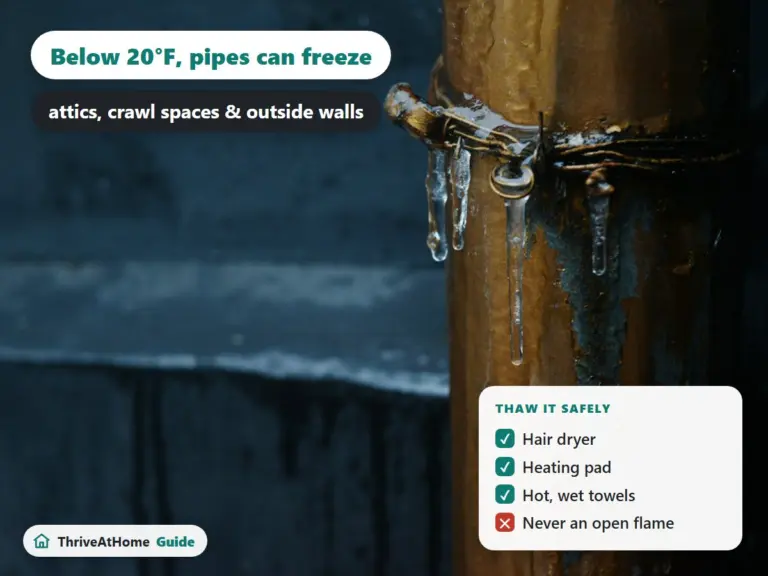
If the heat is going to be out for a while, protect the plumbing first: our frozen pipes guide covers what to do when the house gets cold. A space heater can keep one room livable in the meantime, and the space heater cost calculator shows what that costs per night. And once the furnace is back, check that the air isn’t now too dry, with our winter humidity chart.
Sources: Trane, furnace not blowing hot air; Carrier, why is my furnace blowing cold air; Trane, heat pump defrost cycle; ENERGY STAR, duct sealing; ENERGY STAR, maintenance checklist; CDC, carbon monoxide poisoning basics. Furnaces differ, so your owner’s manual has the final word. General information only; see our Disclaimer.