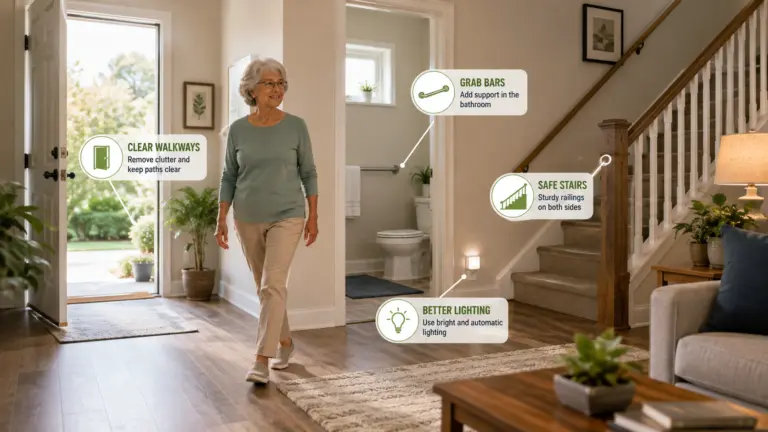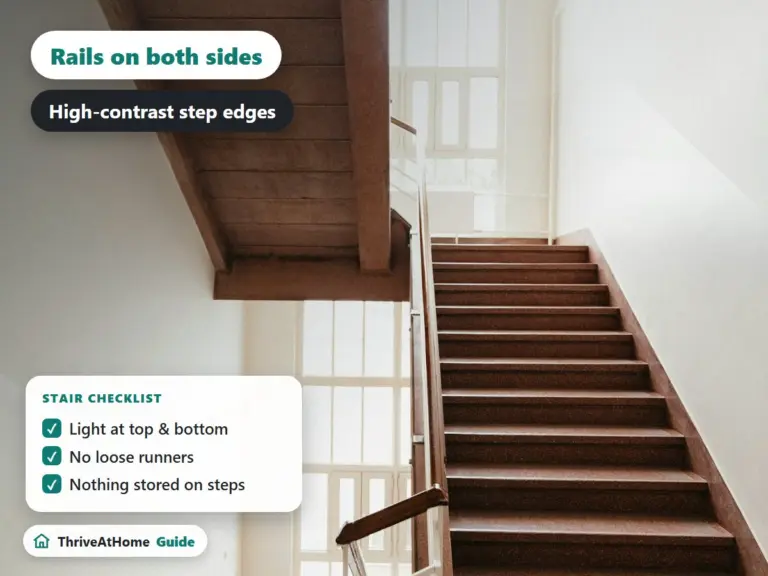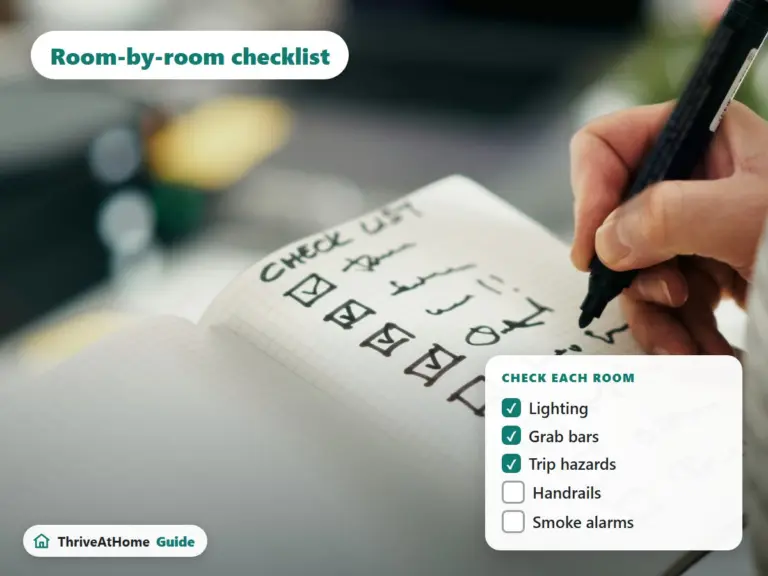
Picture the smallest room in the house, then add wet tile, a hard porcelain edge, and a tub wall you have to step over every morning, close to knee height on many people. That’s a standard bathroom, and it’s why the CDC counts hundreds of thousands of bathroom injuries a year. Most of the fixes are cheaper than people expect, and a few don’t even need a drill, which matters if you rent.
Water, tile and nothing to hold on to
Four things combine here that exist nowhere else in the home: water that makes every surface slick, hard fixtures that turn a stumble into an injury, transfers (sitting, standing, and stepping over the tub) that challenge balance, and a tight space with little to hold on to. According to the CDC, more than a third of bathroom injuries happen while bathing or getting in and out of the tub, and among older adults a large share involve the toilet. The tub/shower and the toilet are the two zones to focus on first.
Tub, toilet, floor, sink: what goes where
🚿 Shower & tub · highest risk
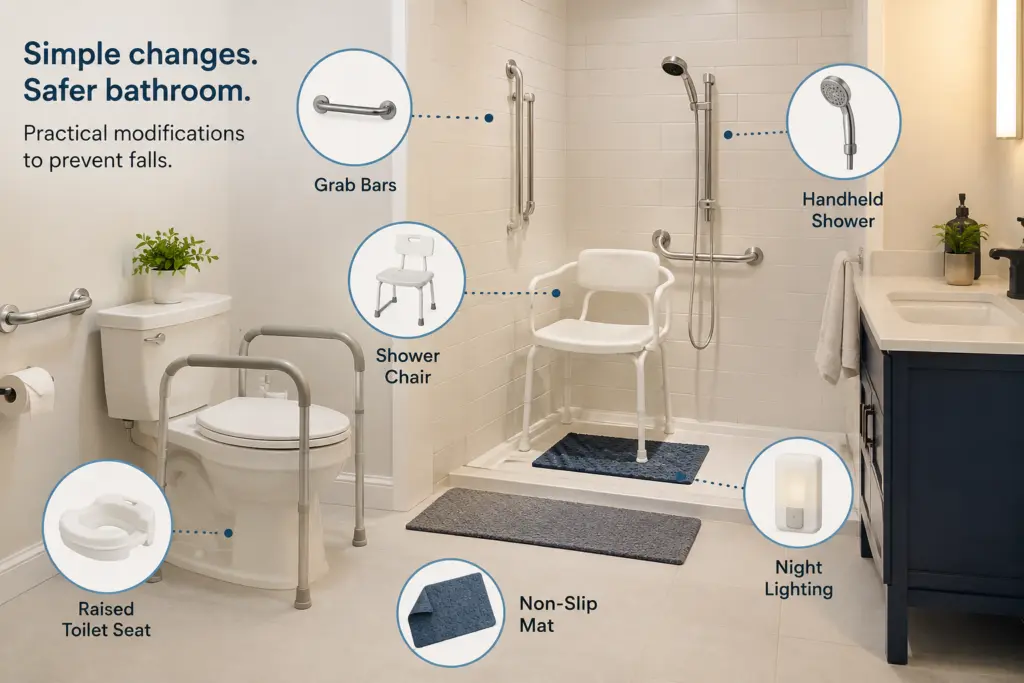
- Grab bars inside and at the entry, anchored to studs
- Non-slip mat or adhesive strips on the floor
- Shower chair or bench for seated bathing
- Handheld showerhead to wash while seated
- Walk-in or curbless shower to remove the step-over (bigger project)
🚽 The toilet · high risk
- Grab bar or toilet safety frame for support standing up
- Raised or comfort-height seat to reduce the drop and lift
- Keep the path to it clear and lit, especially at night
🫵 Floors & entry
- Non-slip flooring or textured, low-pile mats with grip backing
- Wipe up water promptly; keep a squeegee handy
- A curbless, level entry where possible for walkers or wheelchairs
- A lever door handle and a door that opens outward for emergencies
💧 Sink & lighting
- Lever faucets that are easy for weak or arthritic hands
- Bright, even lighting plus a motion-sensor nightlight
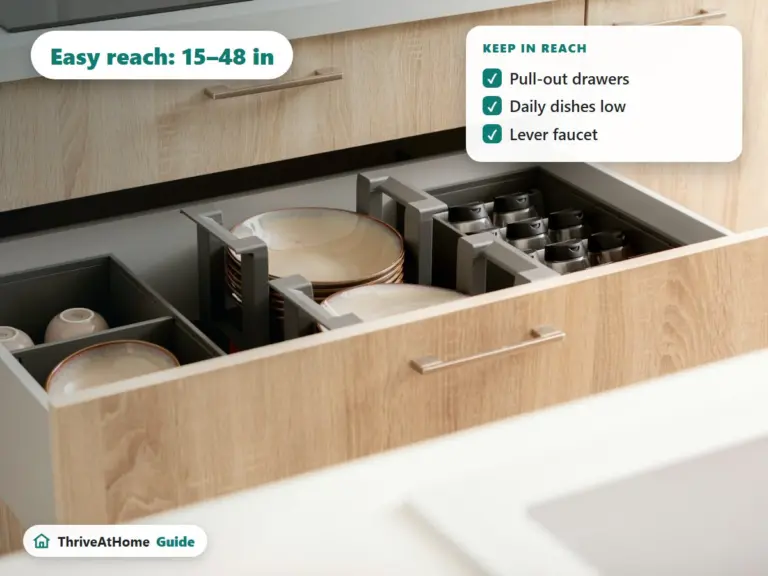
- Store everyday items within easy reach to avoid bending or stretching
- Anti-scald valve or a water heater set to 120°F (49°C)
Where to install grab bars
Grab bars only help if they are in the right spots and mounted securely. These are the four placements that matter most — and where possible, an occupational therapist should confirm the exact height for the person who will use them.
Grab bar placement map
Bars are typically 1.25–1.5" thick for an easy grip and must anchor into wall studs or solid blocking — never drywall alone.
DIY or hire a professional?
- ✅ Easy DIY: non-slip mats and strips, a portable shower chair, a clip-on raised toilet seat, plug-in nightlights.
- 🔧 Hire a pro: grab bars that bear weight, a walk-in shower, a curbless entry, or anything involving plumbing or tile.
- 🩺 Ask an occupational therapist to recommend placements, and consider a Certified Aging-in-Place Specialist (CAPS) contractor for bigger work.
A safer bathroom on any budget
You do not need a full renovation to make a real difference. Start with the essentials and add more as needed.
| Change | What it fixes | Approx. cost (USD) |
|---|---|---|
| Grab bars (installed) | Support at tub, shower, toilet | $15–40 each |
| Non-slip mat / strips | Slippery wet floor | $10–25 |
| Shower chair + handheld head | Standing to bathe | $40–120 |
| Raised / comfort-height toilet seat | Hard sit-to-stand | $25–120 |
| Motion-sensor nightlight | Dark nighttime trips | $10–20 |
| Walk-in / curbless shower | Dangerous tub step-over | $2,500–10,000+ |
Bigger project? Walk-in shower vs. walk-in tub
If the tub step-over has become the real danger, it may be time for a bigger change. Here is how the main options compare so you can weigh them honestly.
| Option | Best for | Approx. cost | Keep in mind |
|---|---|---|---|
| Walk-in / curbless shower | Most people; walker or wheelchair access | $2,500–10,000+ | Most versatile; removes the step-over |
| Walk-in tub | Those who love to soak, seated | $5,000–12,000+ | You must sit while it fills and drains |
| Tub-to-shower conversion / cut-out | Budget option, same layout | $1,000–4,000 | A cut-out lowers the step but does not remove it |
Paying for it: Medicare rarely covers bathroom remodeling, but Medicaid waivers, VA grants, and local Area Agency on Aging programs may help with medically necessary changes.
Renting? Changes you can make without remodeling
If you rent — or simply do not want to drill into tile — plenty of options add safety without permanent changes:
- Freestanding grab rails — a floor-to-ceiling tension pole or a toilet safety frame that stands on its own, no drilling.
- A portable shower chair or bench and a clip-on handheld showerhead that attaches to the existing arm.
- A clamp-on tub rail that tightens onto the side of the bathtub.
- Removable non-slip strips and a raised toilet seat that simply clips on.
- Plug-in nightlights and stick-on battery lights — no wiring.
One caution on suction grab bars: suction-cup rails are fine as a light balance guide, but they can release without warning and must never be trusted to hold your full body weight. For real weight-bearing support, use a screw-mounted bar or a freestanding frame that rests on the floor.
Things people grab that were never meant to hold them
When someone slips, they reach for whatever is closest. In most bathrooms that’s a towel bar, a soap dish or the shower curtain, and none of them is built to take a person’s weight. A grab bar screwed into drywall alone is barely better: it feels solid until the day it really matters. Two smaller culprits are worth fixing too. One is a fluffy bath mat with no grip backing, which slides on wet tile. The other is a bathroom that’s pitch dark at 3 a.m., and a $10 plug-in nightlight fixes that.
✅ Bathroom safety checklist
Press Ctrl + P (or Cmd + P) to print and walk your bathroom.
Once the bathroom is sorted, the stairs and the path to the bathroom at night are usually next. Our room-by-room home safety guide covers the rest of the house.
Sources: CDC MMWR — Nonfatal Bathroom Injuries; National Institute on Aging — Preventing Falls at Home.
This article is general information about home safety and accessibility, not professional or medical advice. Check local building codes, and hire a licensed professional for electrical, plumbing or structural work. See our full Disclaimer.