You stop seeing your own house after a while. The rug that curls at one corner, the cord that crosses the hallway, the stair light that’s been out since spring. Nobody notices them anymore, until someone trips. A home safety assessment is just a deliberate walk through the house to notice them again, while they’re still cheap and easy to fix.
You don’t need training to do one. A family member with a checklist and a free afternoon can catch most of the obvious problems. If someone’s needs are more complex, an occupational therapist can do a professional version tailored to the person.
Walk, spot, rank, fix
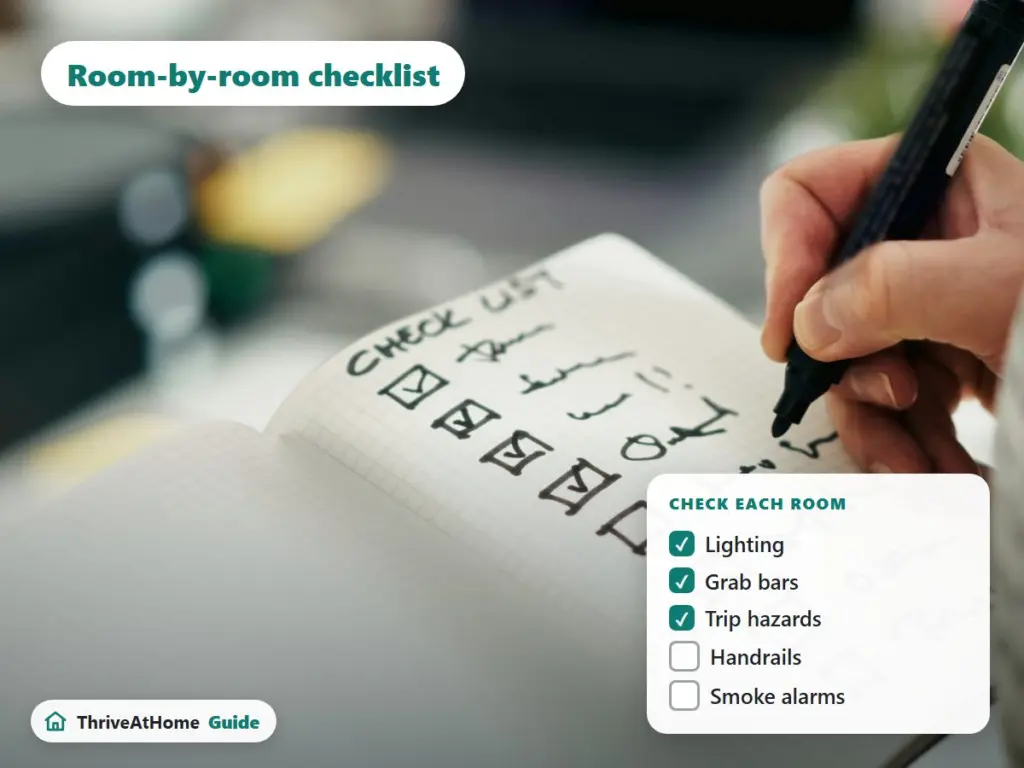
Bring a notepad or your phone and go in this order:
When you rank what you found, put the bathroom and stairs at the top. Those are where falls do the most damage. Plenty of the fixes on the list cost less than $20.
What to look for in each part of the house
There’s a printable version of this list further down if you’d rather carry paper.
🛀 Bathroom & 🧱 stairs · first
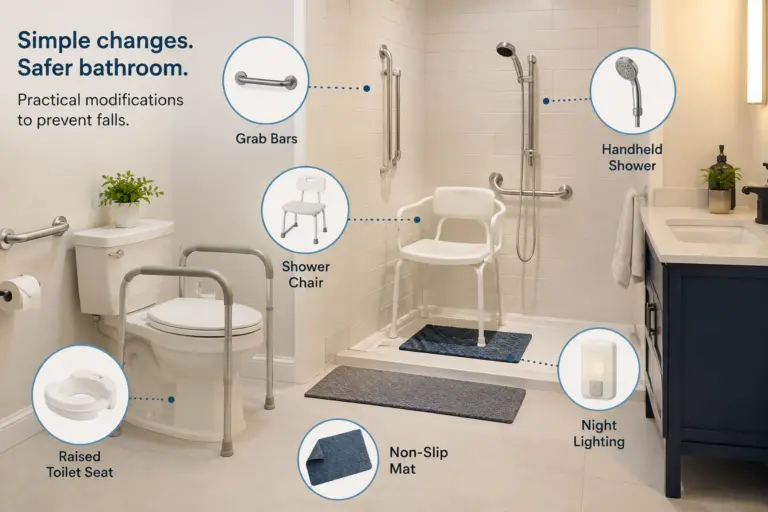
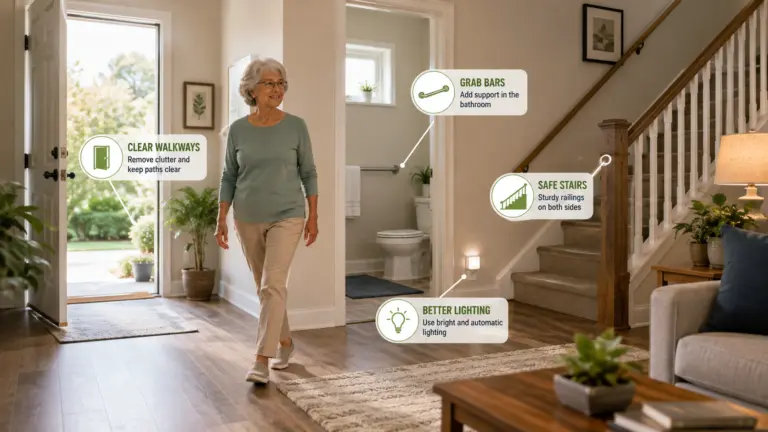
- Grab bars at tub, shower, and toilet
- Non-slip surfaces; raised toilet seat if needed
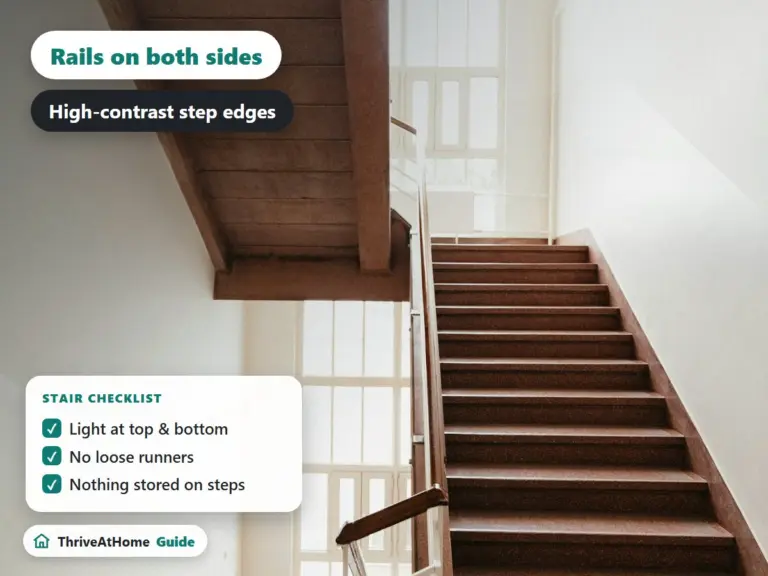
- Handrails on both sides of stairs; clear, well-lit steps
Details: bathroom modifications.
🚪 Entry, hallways & living room
- Clear, wide walkways; no clutter or cords
- Rugs removed or secured with non-slip backing
- A firm chair with armrests that is easy to rise from
🍳 Kitchen
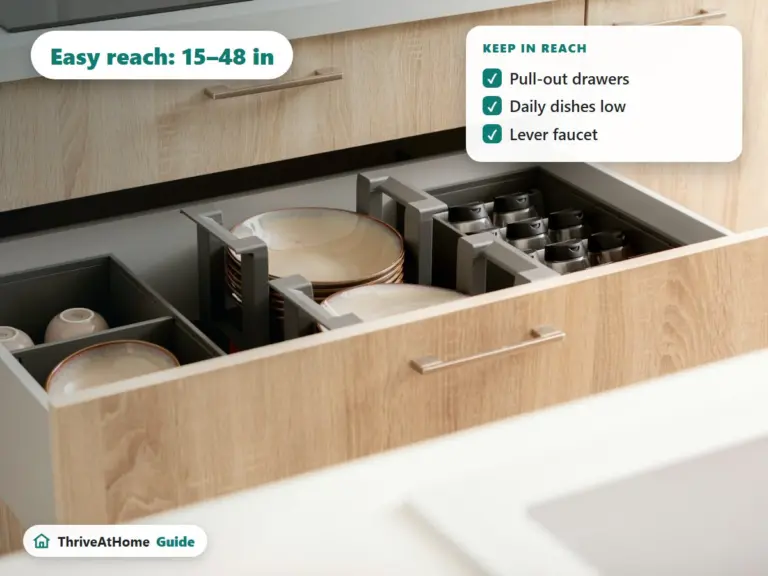
- Everyday items within reach — no climbing or deep bending
- A stable step stool with a handle if needed
- Good task lighting; wipe spills promptly
🛌 Bedroom & whole home
- Lamp and phone within reach of the bed; lit path to the bathroom
- Working smoke and carbon-monoxide alarms
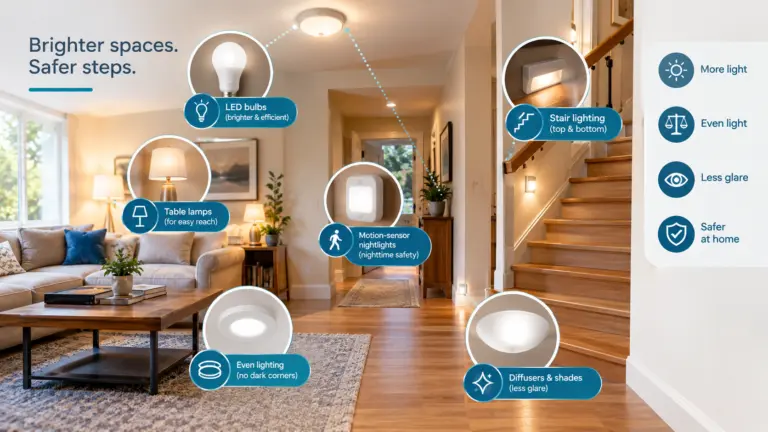
- Bright, even lighting throughout — see home lighting
What a walkthrough of the house won’t catch
A checklist finds loose rugs, not unsteady legs. While you walk through, pay attention to how the person who lives there moves around. Do they reach for furniture to steady themselves? Squint at the stairs? Leave the stove on? You won’t fix any of that with a hardware-store purchase. If it worries you, raise it with their doctor. What you can fix at home is making sure a phone is always within reach and that the house doesn’t depend on perfect balance or eyesight to be safe.
✅ Printable home safety assessment checklist
Press Ctrl + P (or Cmd + P) to print and walk the home.
When a professional visit is worth it
Consider a professional assessment if needs are complex or changing — after a fall, a new diagnosis, or a hospital discharge. An occupational therapist can tailor recommendations to the person’s exact abilities, and some Area Agencies on Aging, nonprofits, and fire departments offer free or low-cost home safety visits. Your local agency, found through the Eldercare Locator, can point you to what is available.
Hazards that hide in plain sight
These are the ones people walk past for years:
- 🐾 Pets and pet bowls underfoot, and toys or leashes on the floor.
- 🔌 Extension cords and phone chargers stretched across walkways.
- 🛏 Low or unstable furniture used for support — and reaching for it.
- 👓 Wrong glasses — reading glasses worn while walking blur the floor.
- 🌱 Outdoor steps, paths, and porches — wet leaves, ice, and no handrail.
Put the next one on the calendar
Houses change slowly and people change faster. Repeat the walkthrough once a year (doing it the same weekend you change the clocks makes it easy to remember) and again after any fall, hospital stay or noticeable change in how someone gets around.
Got a list? The home safety guide sorts the fixes into what to do first and roughly what each one costs. For the two rooms that usually top the list, see the bathroom guide and stair safety. If the walkthrough turned up a lot of dark corners, better lighting is the cheapest fix of all.
Sources: National Institute on Aging — Preventing Falls at Home, Room by Room; CDC — Older Adult Fall Prevention.
This article is general information about home safety and accessibility, not professional or medical advice. Check local building codes, and hire a licensed professional for electrical, plumbing or structural work. See our full Disclaimer.